Parking garage waterproofing membranes
Traffic-bearing systems that keep water and road salt out of your structural slab — installed by an RBQ-licensed contractor across Greater Montreal.
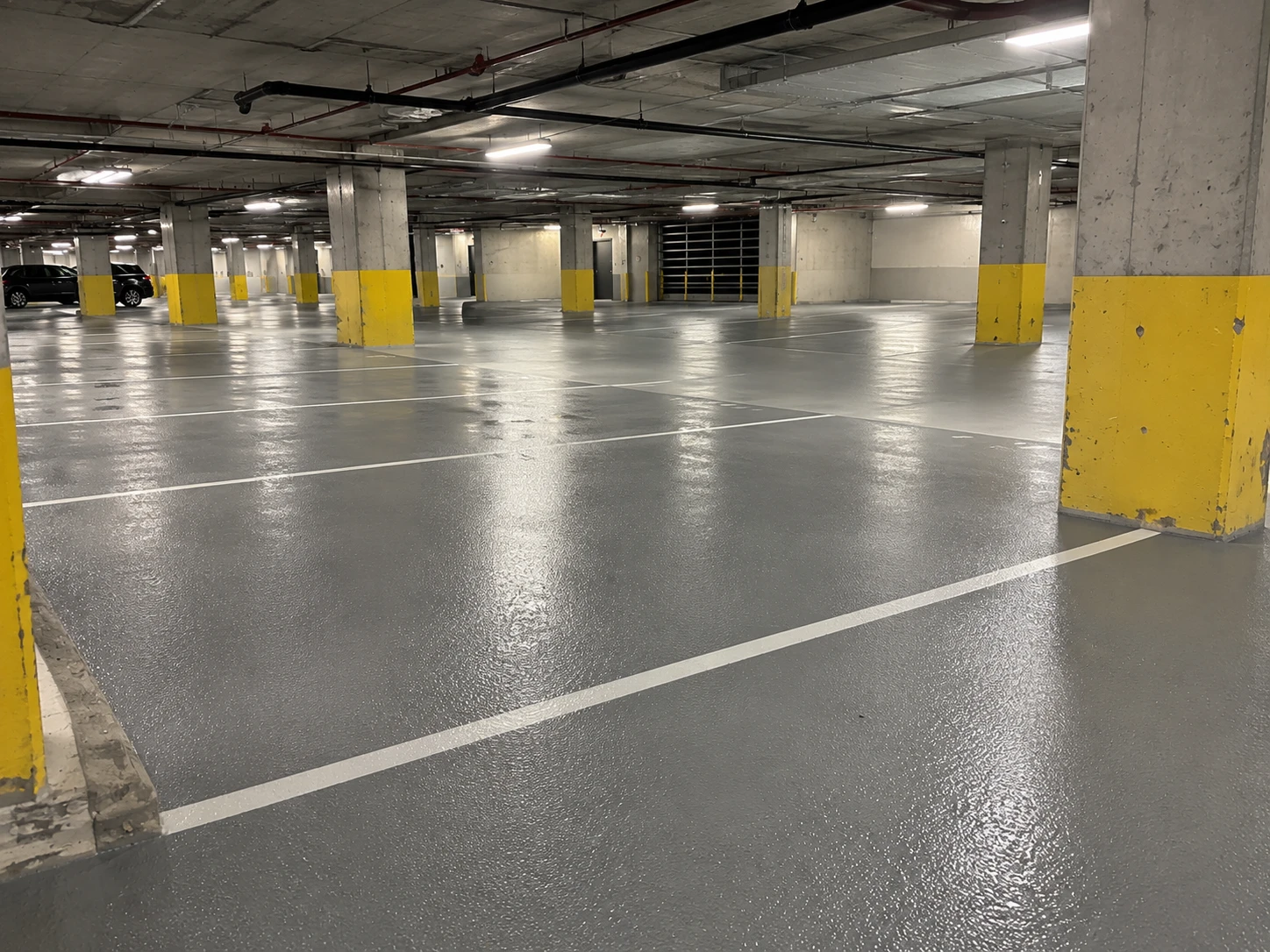
Water is what destroys a parking structure
A parking slab is not just a floor — it is the structure. Every winter, vehicles carry in meltwater loaded with de-icing salt. Bare or failed concrete lets that chloride solution soak through to the reinforcing steel, and once the rebar begins to corrode it expands, cracking the slab from the inside out.
By the time you see spalling on a ceiling below, staining on a column, or efflorescence hanging from a deck soffit, the damage is structural and the repair is an order of magnitude more expensive than the membrane would have been.
A traffic-bearing membrane breaks that cycle. It is a continuous, flexible, waterproof layer bonded to the deck, built to carry vehicle loads and to bridge the small movements and hairline cracks that concrete develops as it ages.
It also does the everyday work you notice: it stops the dusting, gives you a surface that can be washed, resists oil and fuel drips, and takes line marking cleanly.
What a membrane gives you
BEYOND WATERPROOFINGSlip resistance
Aggregate broadcast into the intermediate coat gives tires and pedestrians grip, wet or dry.
Washable surface
No more concrete dusting. Salt residue and grime wash off instead of soaking in.
Wear and abrasion resistance
A renewable wear coat takes daily traffic, turning and braking loads.
Oil and fuel resistance
Drips from vehicles stay on the surface where they can be cleaned up.
Clean line marking
Bay lines, numbers and arrows apply crisply and stay legible. A brighter, better-kept garage.
Longer structure life
Keeping chlorides away from the rebar is what protects the slab itself.
No single right product
There is no single right product for a parking structure. The system is chosen around the deck’s exposure, its condition, how much movement it has and how long you can give us for access.
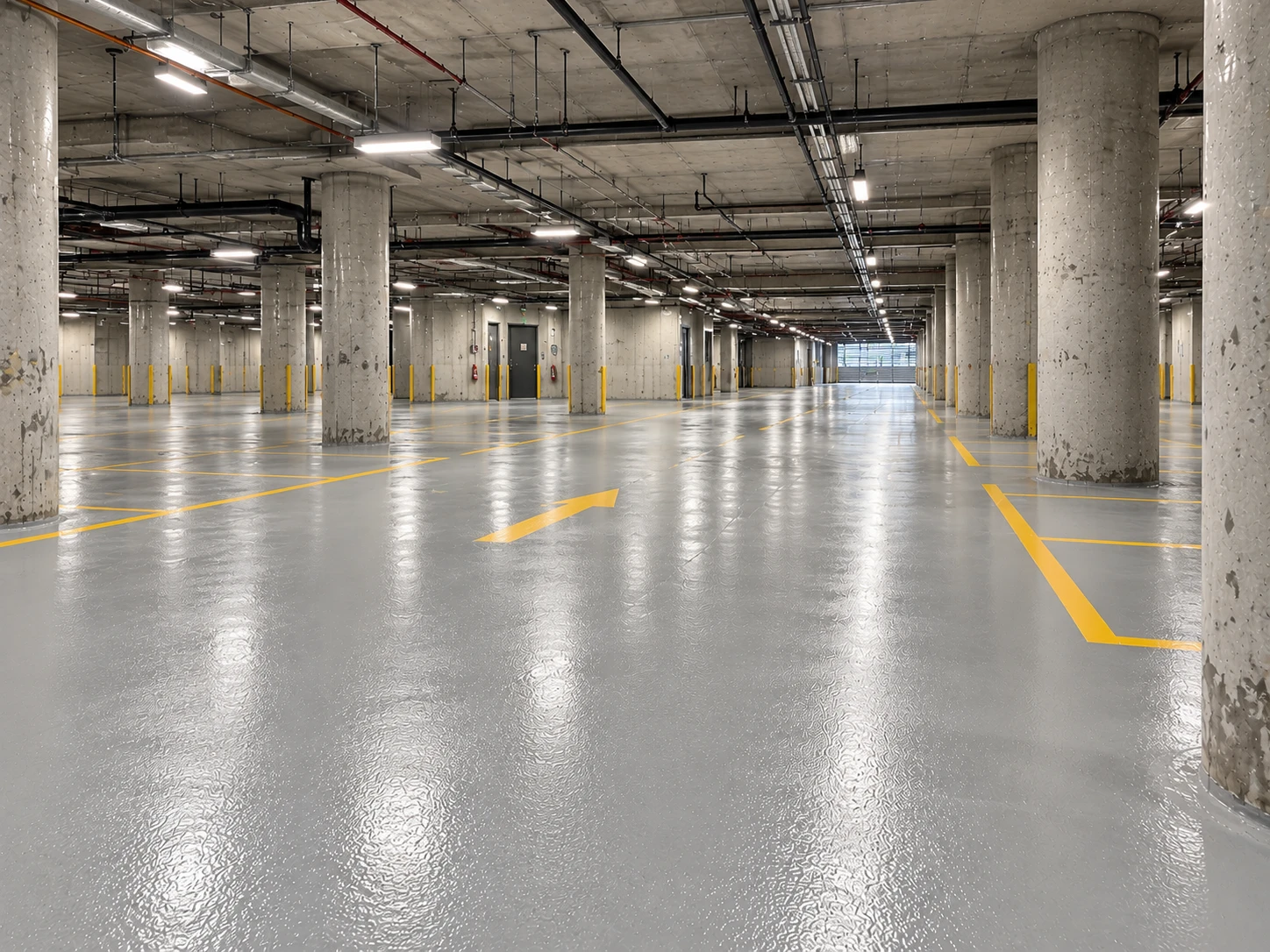
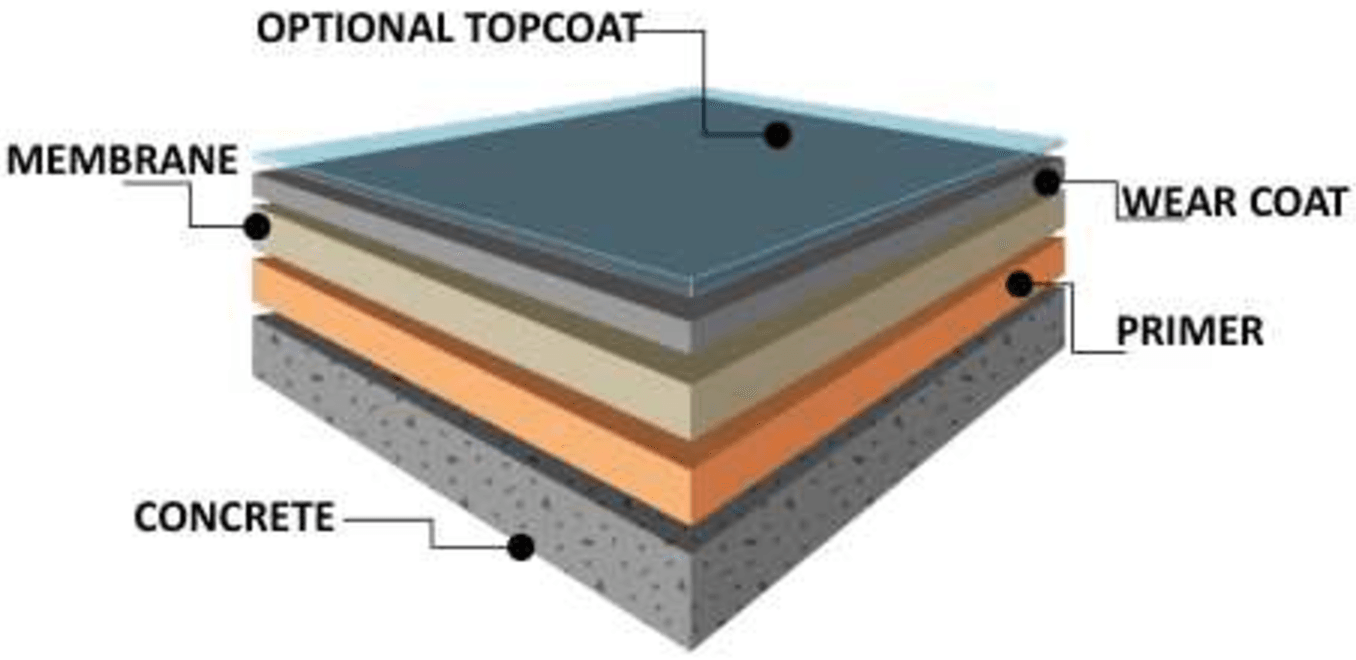
Polyurethane traffic membrane
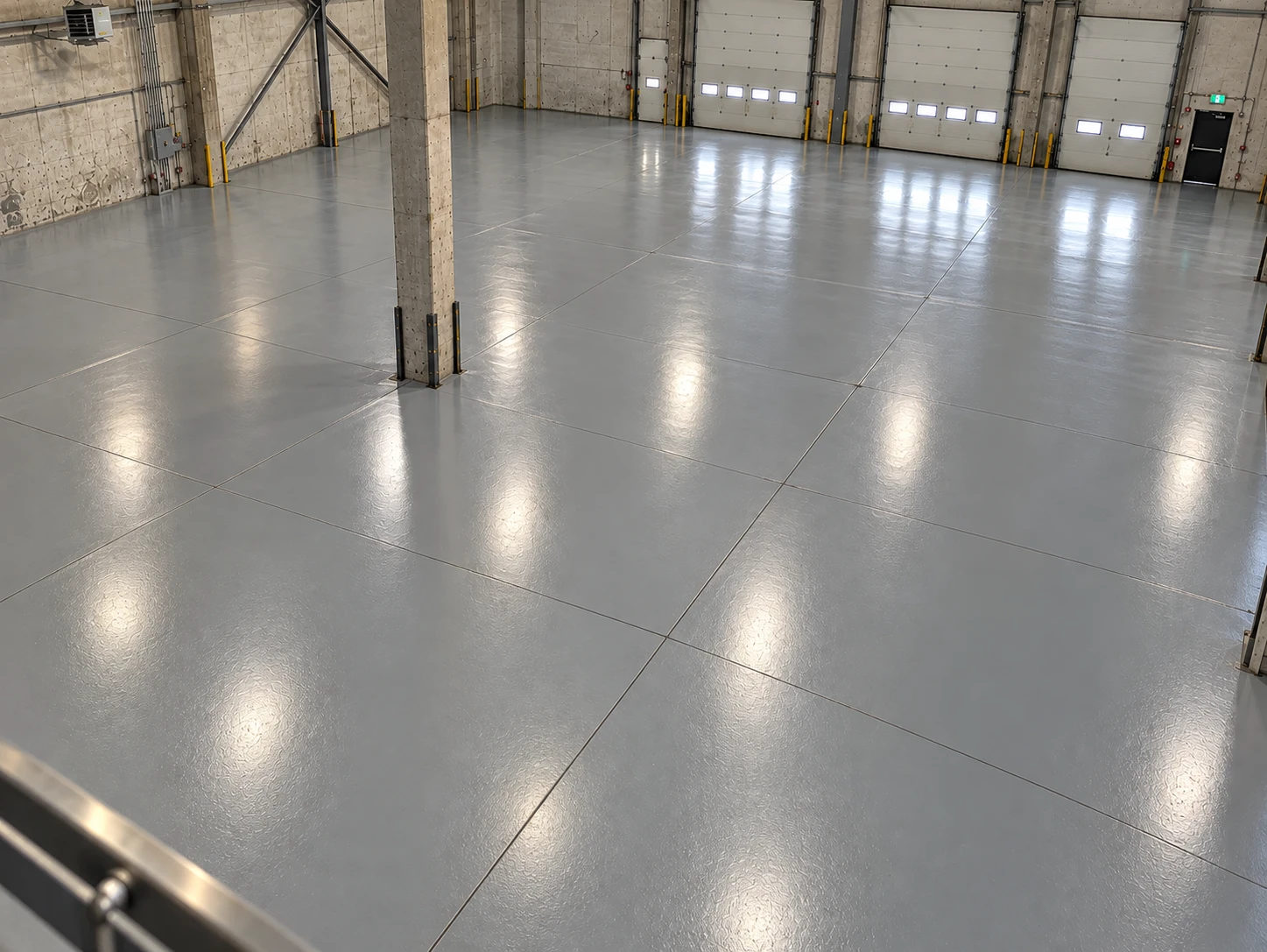
This coating system utilizes epoxy and polyurethane technologies to protect parking decks and concrete traffic bridges. It is an elastomeric, waterproofing, seamless system designed to protect concrete substrates against water infiltration and wear caused by vehicular traffic. The membranes included in this system provide high elongation and tear resistance.
Polyaspartic
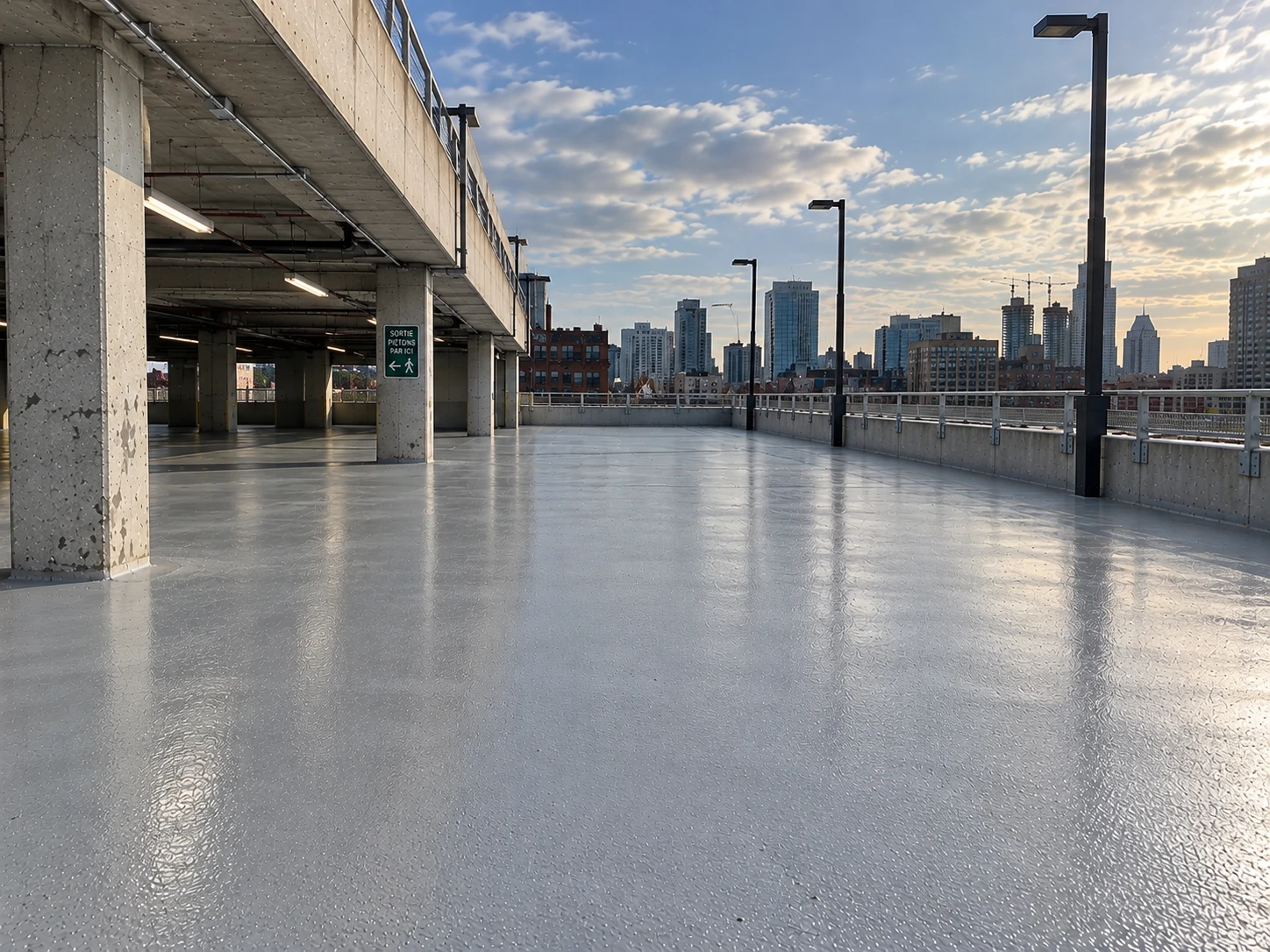
Chosen when access time is the constraint. It cures fast and over a wide temperature range, so a zone can be returned to service far sooner than conventional systems allow. UV-stable, so exposed upper decks and ramps will not amber.
Solid-colour epoxy
High-build and chemically resistant, used as a body coat or where a hard, dense, easily cleaned surface matters more than flexibility. Typically specified for lower levels, mechanical rooms and storage areas rather than exposed decks.
Cementitious repair and levelling
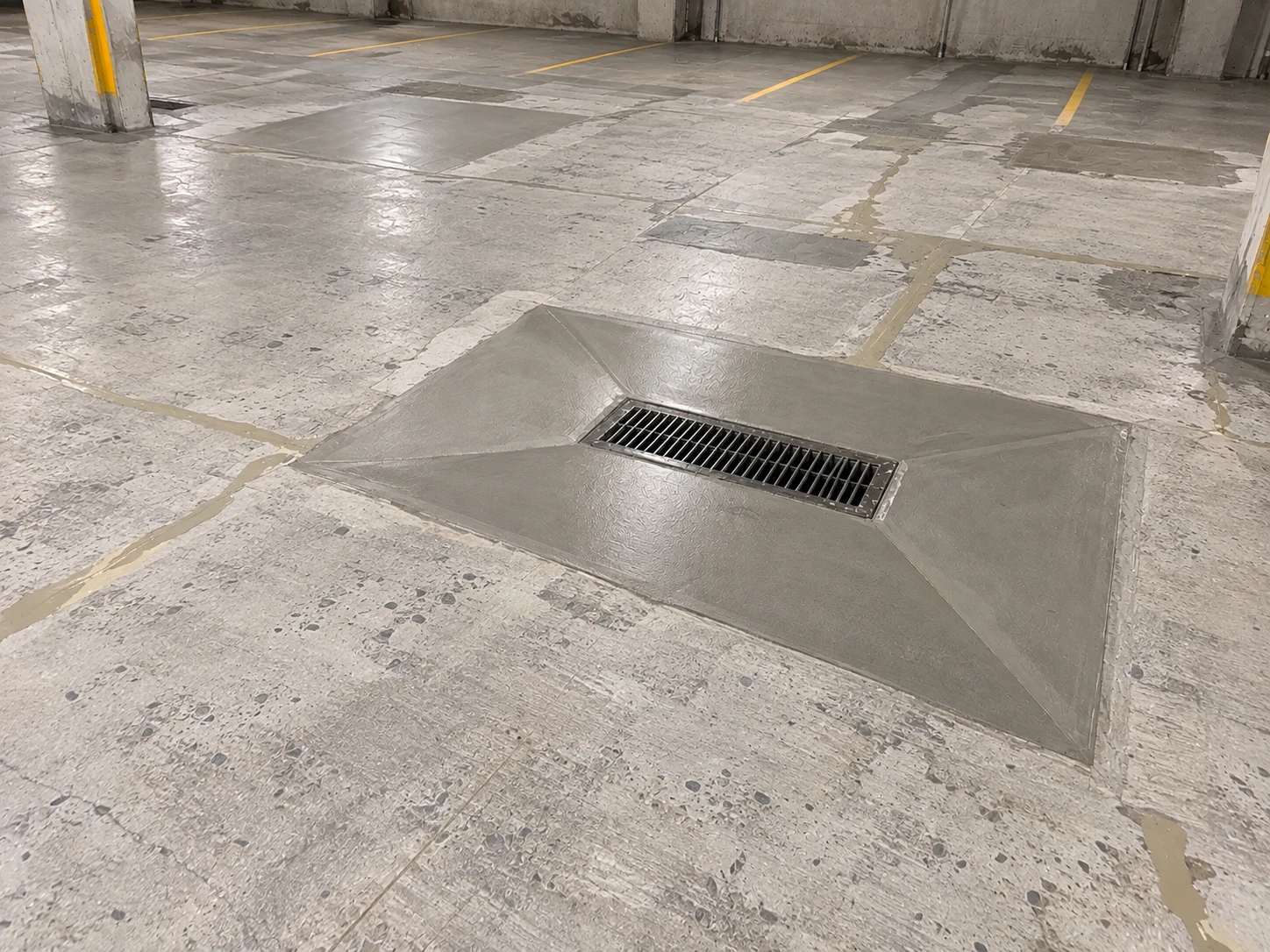
Before any coating goes down, damaged concrete has to be rebuilt. Polymer-modified repair mortars restore spalled areas, patch delamination and re-establish fall toward the drains so water leaves the deck instead of sitting on it.
Structures we work on
We work directly with property managers and condominium syndicates, and alongside general contractors, engineers and architects where the work is specified. If you have a condition assessment or an engineer’s report, send it with your enquiry and we will quote to the specification.
How the work is done
Assessment of the existing deck
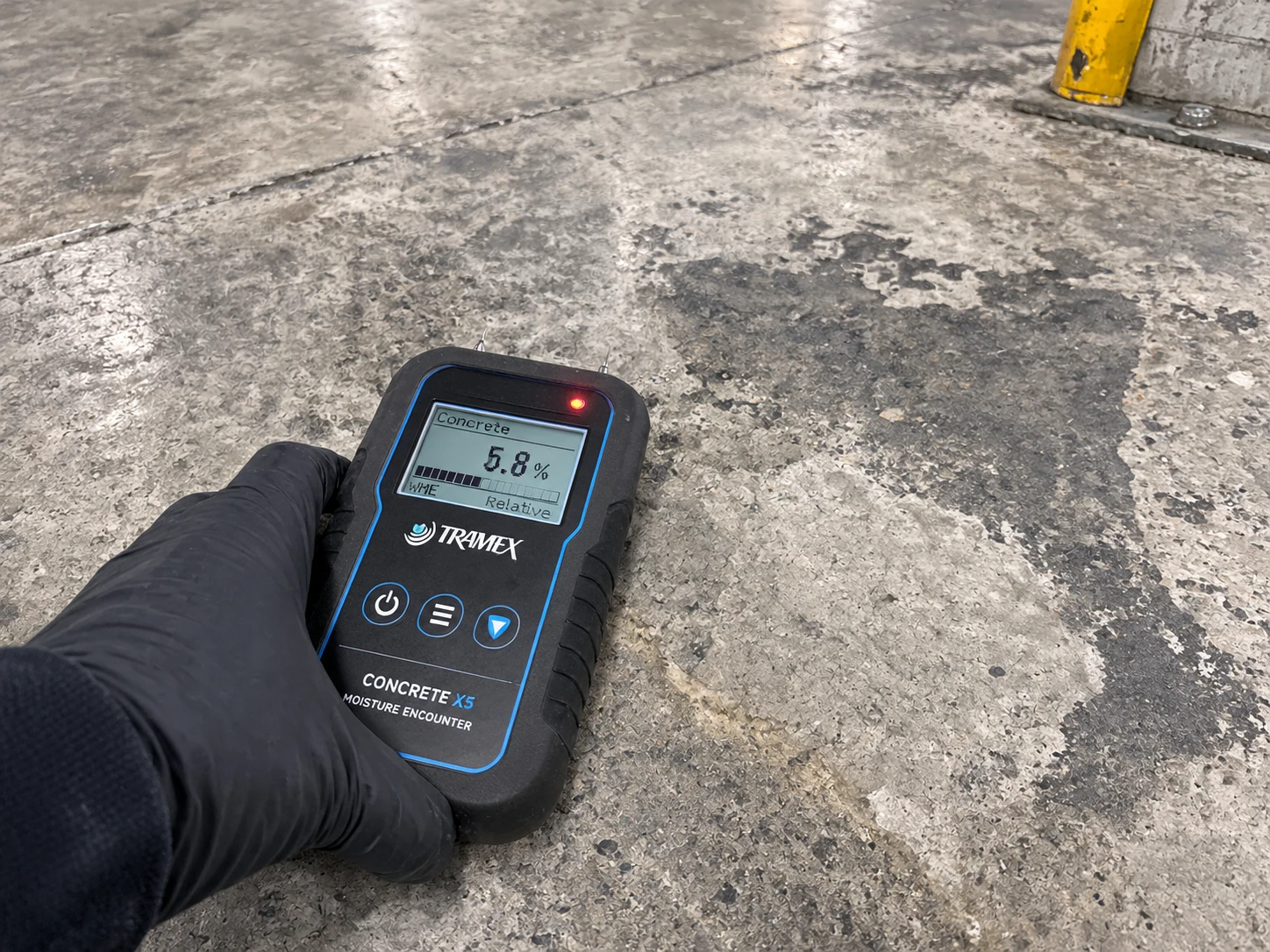
We walk the structure, check the condition of the concrete, look for delamination, test for moisture, and identify where water is actually getting in. You get a written scope, not a guess.
Mechanical surface preparation
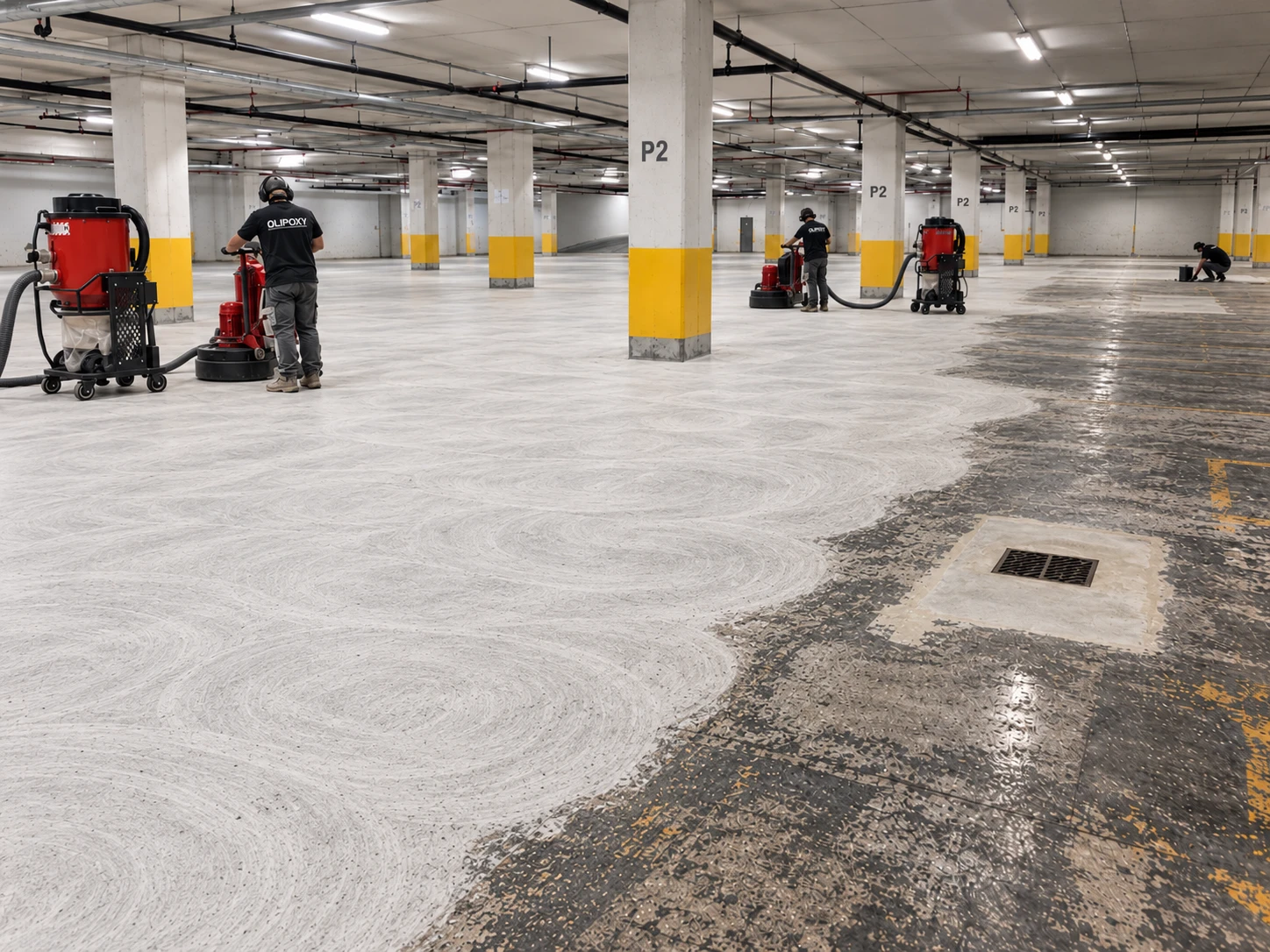
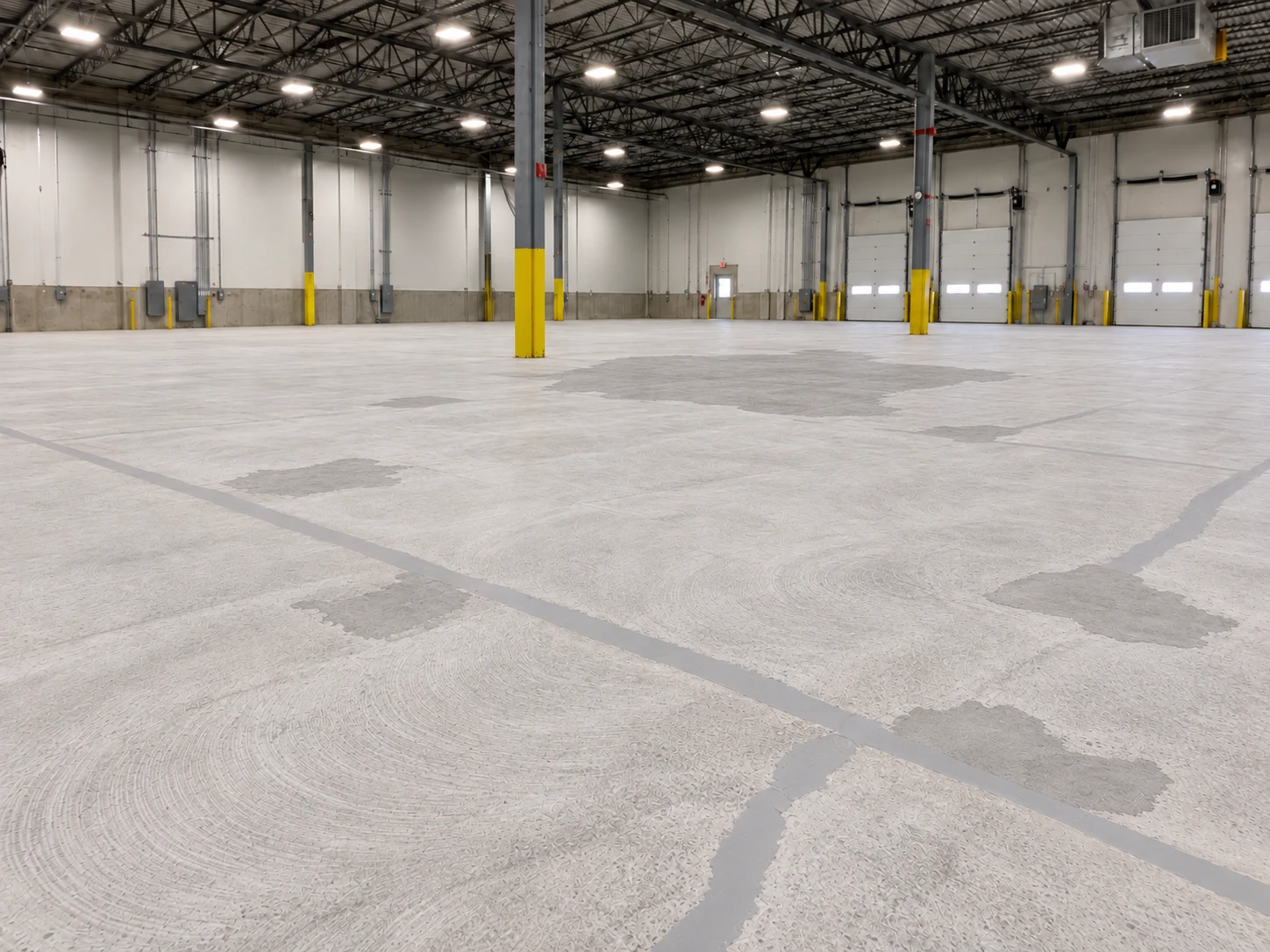
Diamond grinding or shot blasting opens the concrete to a sound, clean profile. No membrane bonds reliably to a sealed, contaminated or laitance-covered surface, and this is the step cheap work skips.
Concrete repair
Spalled and delaminated areas are cut out and rebuilt with repair mortar. Cracks are repaired with epoxy and polyurethane products. Where ponding has been a problem, falls are corrected toward the drains.
Membrane build-up
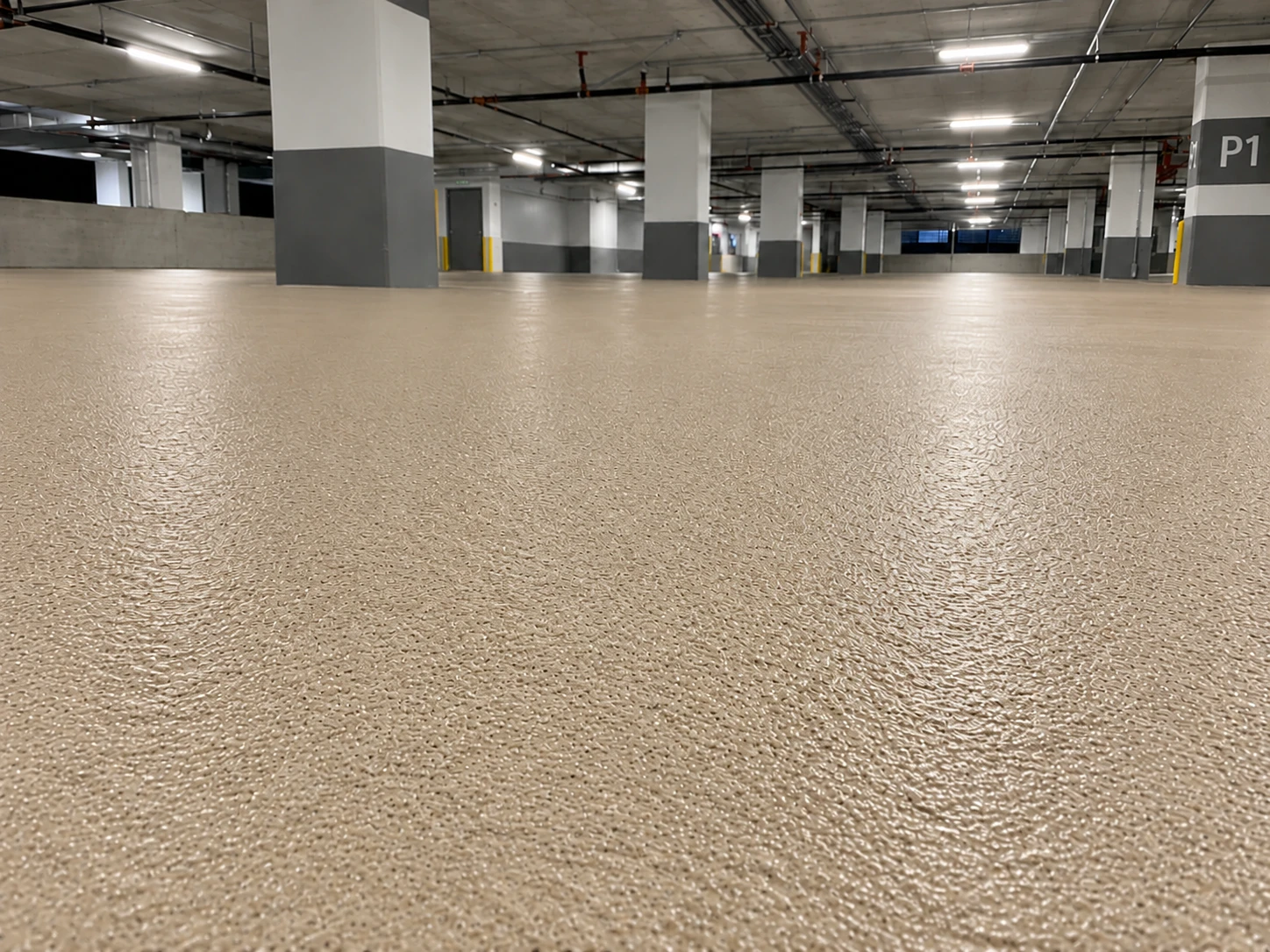
The base and intermediate coats are applied at specified thickness, with aggregate broadcast into the intermediate coat to establish slip resistance.
Wear coat and line marking
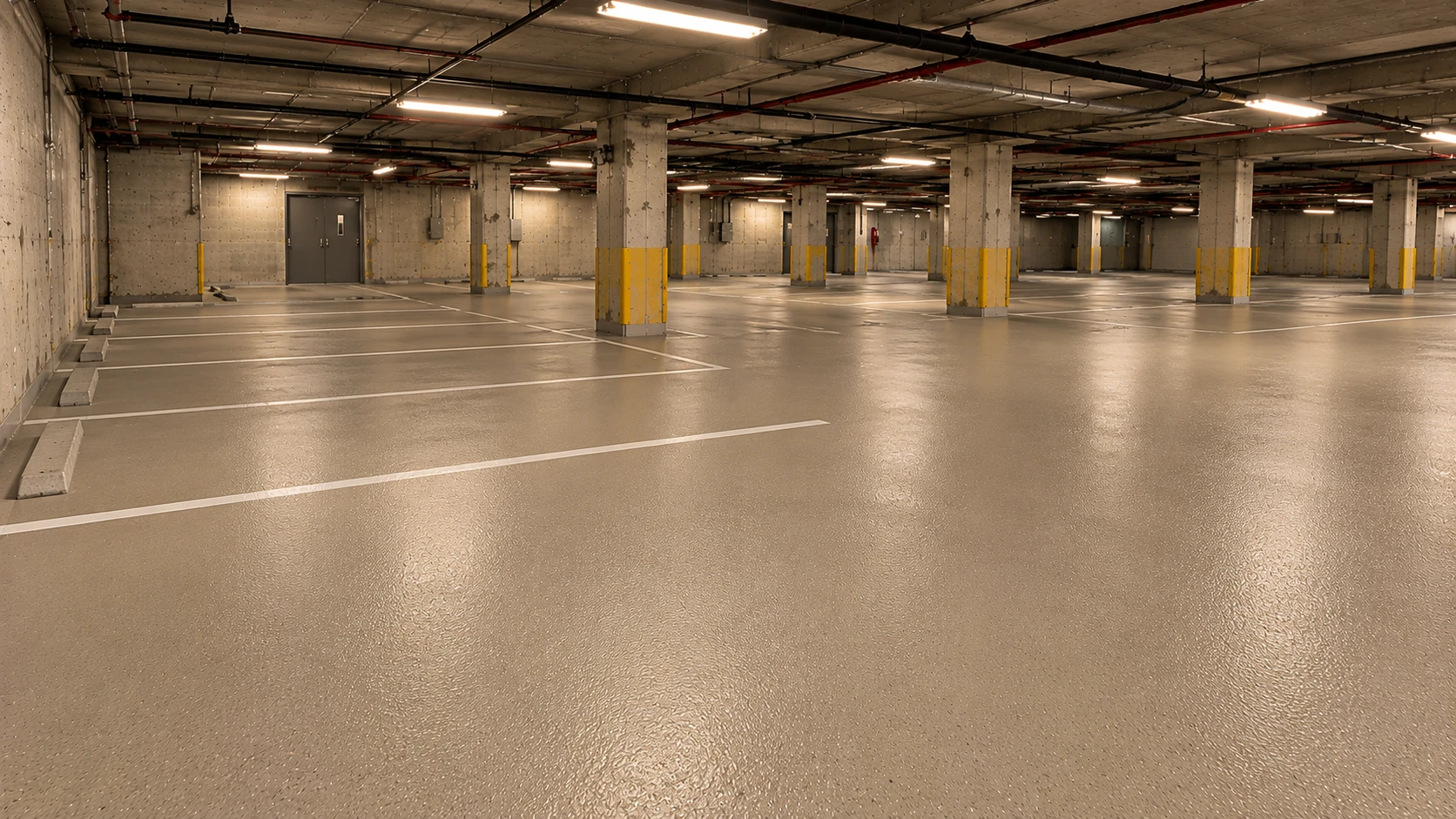
The wear coat takes the traffic and can be renewed in future without redoing the whole system. Bay lines, numbers, directional arrows and accessibility markings are applied last.
We work around the building, not the other way round
Almost no building can close its parking. Work is staged by zone or by level so residents and tenants always have somewhere to park, with schedules agreed in advance and posted. Where the window is tight, a polyaspartic build returns a zone to service quickly. Evening and weekend work is available where daytime access is impossible.
See finished floors
Parking decks, warehouses, plants and workshops completed across Greater Montreal.
Questions we get asked
How long does a parking membrane last?+
A correctly installed and maintained traffic membrane is a long-term system, and the wear coat is designed to be renewed periodically rather than the whole build-up being replaced. Life depends far more on drainage, traffic volume and how well the detailing was done than on the product on the label. Warranty terms on commercial work are set per project and stated in the quote.
Can you work on an occupied building?+
Yes — that is the normal case. We stage the work so part of the structure is always available, agree the schedule with the property manager before starting, and post notices for residents. Odour is a real consideration underground, and we plan ventilation and product selection around it.
Do you work from an engineer’s specification?+
Often, yes. If your building has had a condition assessment or you are working to a consultant’s spec, send it with your enquiry and we will price the specified system. Where there is no spec, we will tell you what we would install and why.
What if the concrete is in worse shape than it looks?+
That is what the assessment is for. Delamination is not always visible, and finding it after mobilisation is how projects go over budget. We sound the deck and set out repair quantities before quoting, so the number you get reflects the structure you actually have.
 © Olipoxy · RBQ 5817-2180-01 · Greater Montreal