Commercial and industrial floor coatings
Durable, waterproof, anti-slip systems for warehouses, plants, workshops and large concrete surfaces — matched to how the floor is actually used, not to a catalogue.
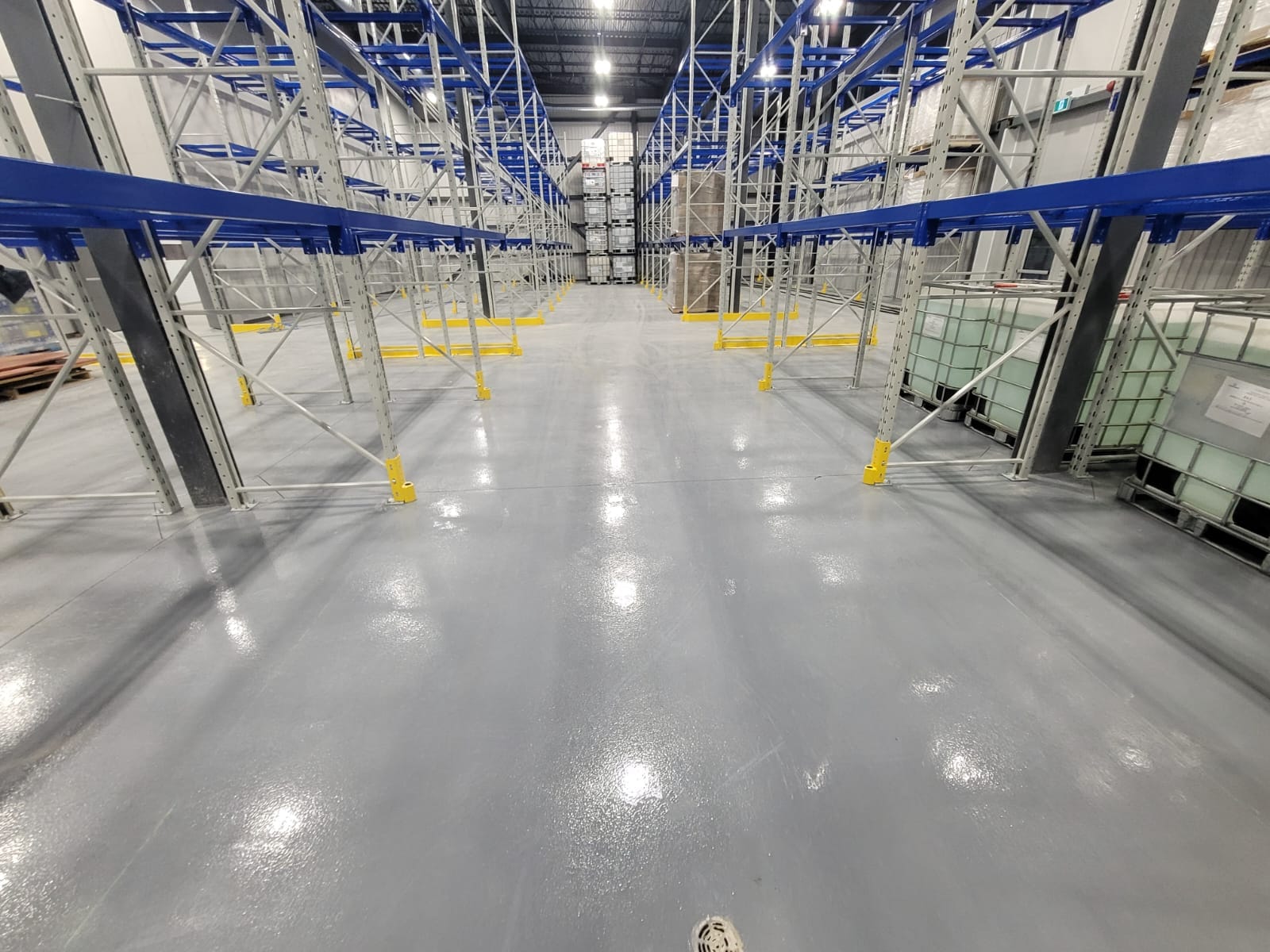
The right system depends on the floor’s real workload
Most failed industrial floors were not failed products — they were the wrong specification, or the right one put down on concrete that was never properly prepared. A coating that performs in a showroom will not survive a forklift aisle, and a chemical-resistant build is wasted money in a dry storage bay.
So the first conversation is about use, not product. What runs on it, how often, what gets spilled, how clean it has to be, how cold it gets, and how long you can give us without stopping work.
Four systems, chosen by workload
We install all four and have no reason to push one over another. The right answer comes from the traffic, the chemicals, the moisture and the downtime you can absorb.
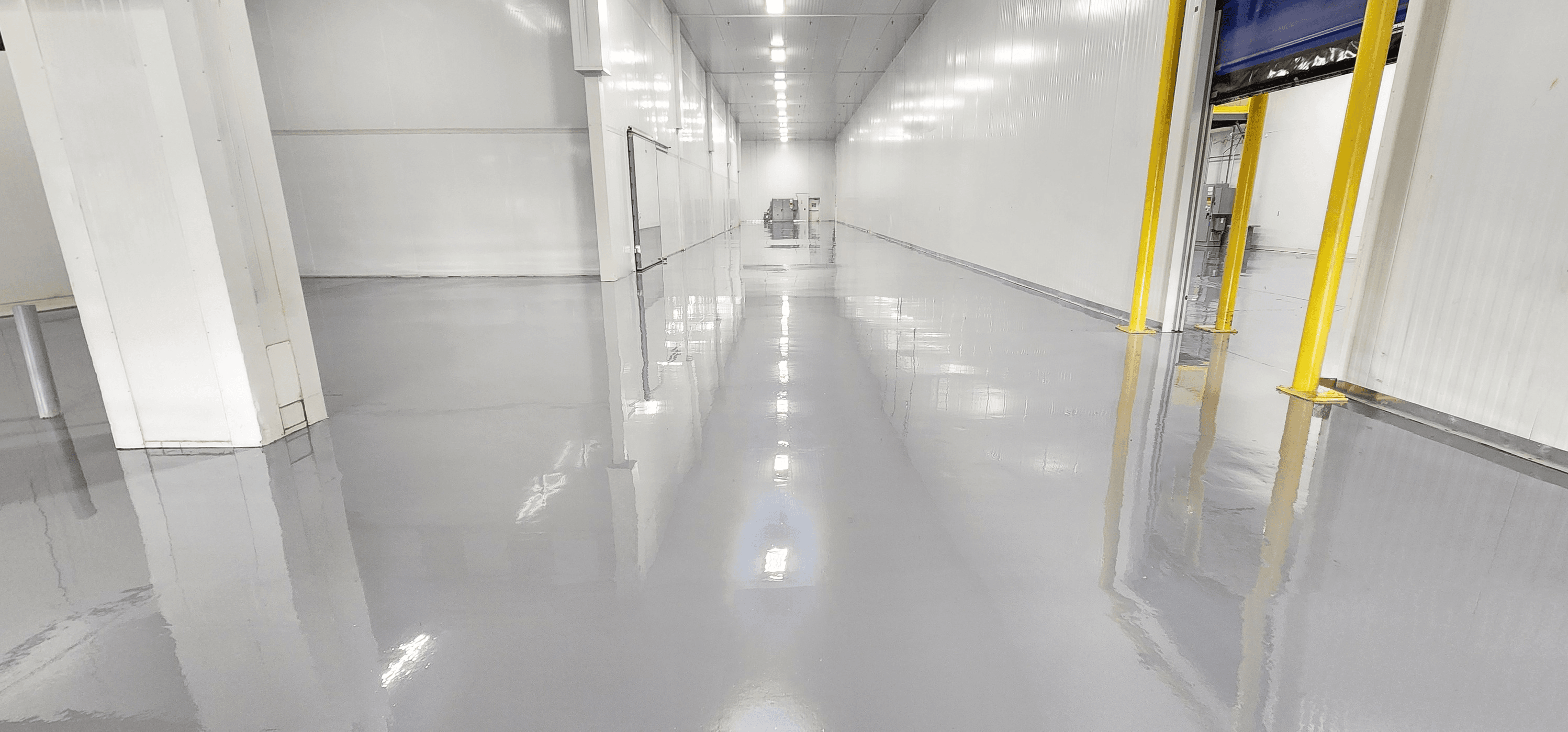
Solid-colour epoxy
High-build, hard and chemically resistant, and the most cost-effective way to seal a large surface. Available with quartz or flake broadcast for slip resistance and to disguise wear. The default for warehouses, plants and storage areas.
Polyurethane topcoats
Tougher and more flexible than epoxy, with better abrasion and chemical resistance, and UV-stable so it will not amber near daylight. Usually specified as the wear layer over an epoxy body coat where traffic is heavy.
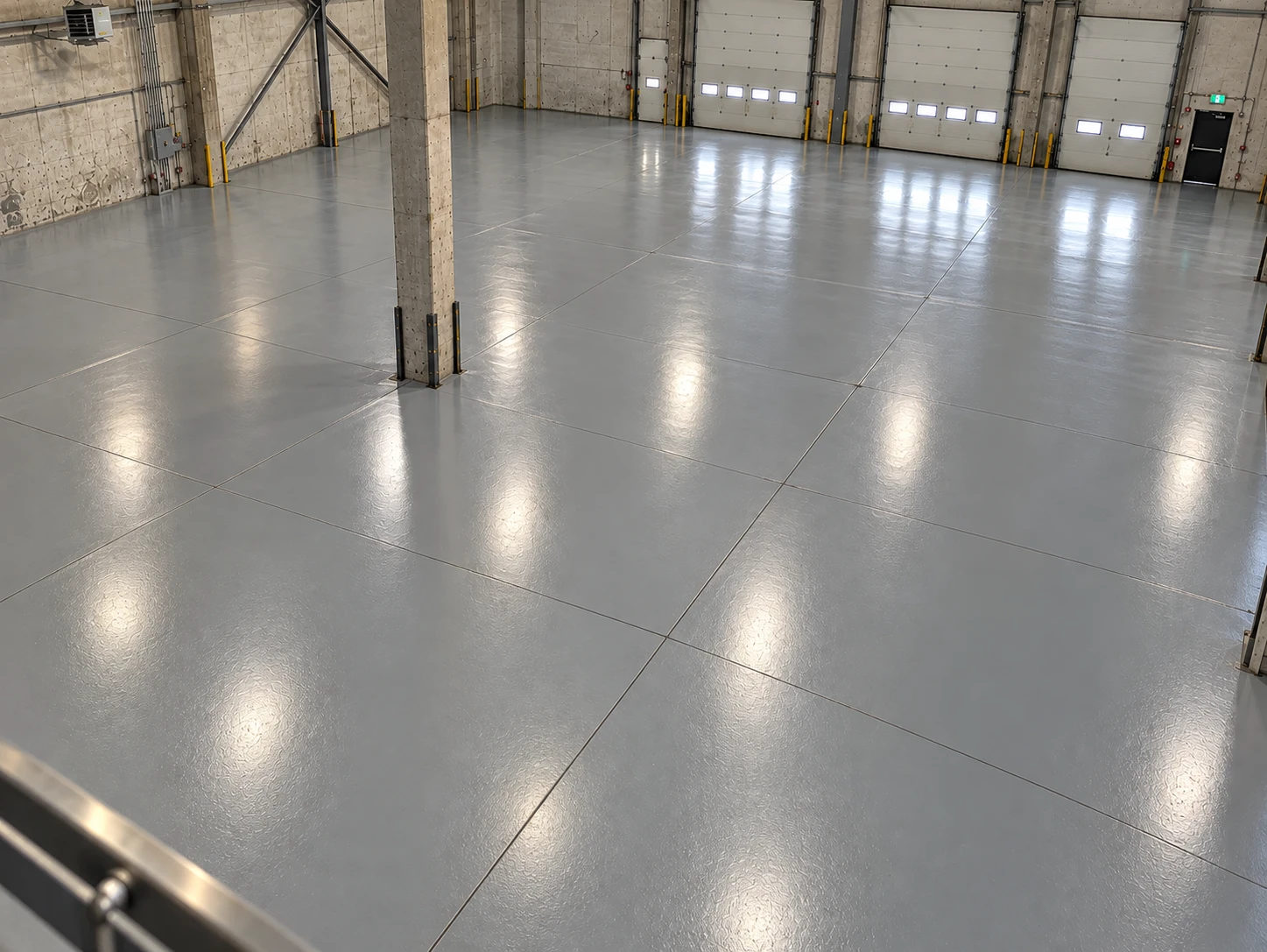
Grind and seal polyurethane
The concrete itself is mechanically ground and then sealed, rather than built up with a thick coating. Far less expensive per square foot on very large areas, keeps the concrete look, and is easy to maintain — a good fit for big-box retail, showrooms and warehouse floors in sound condition.
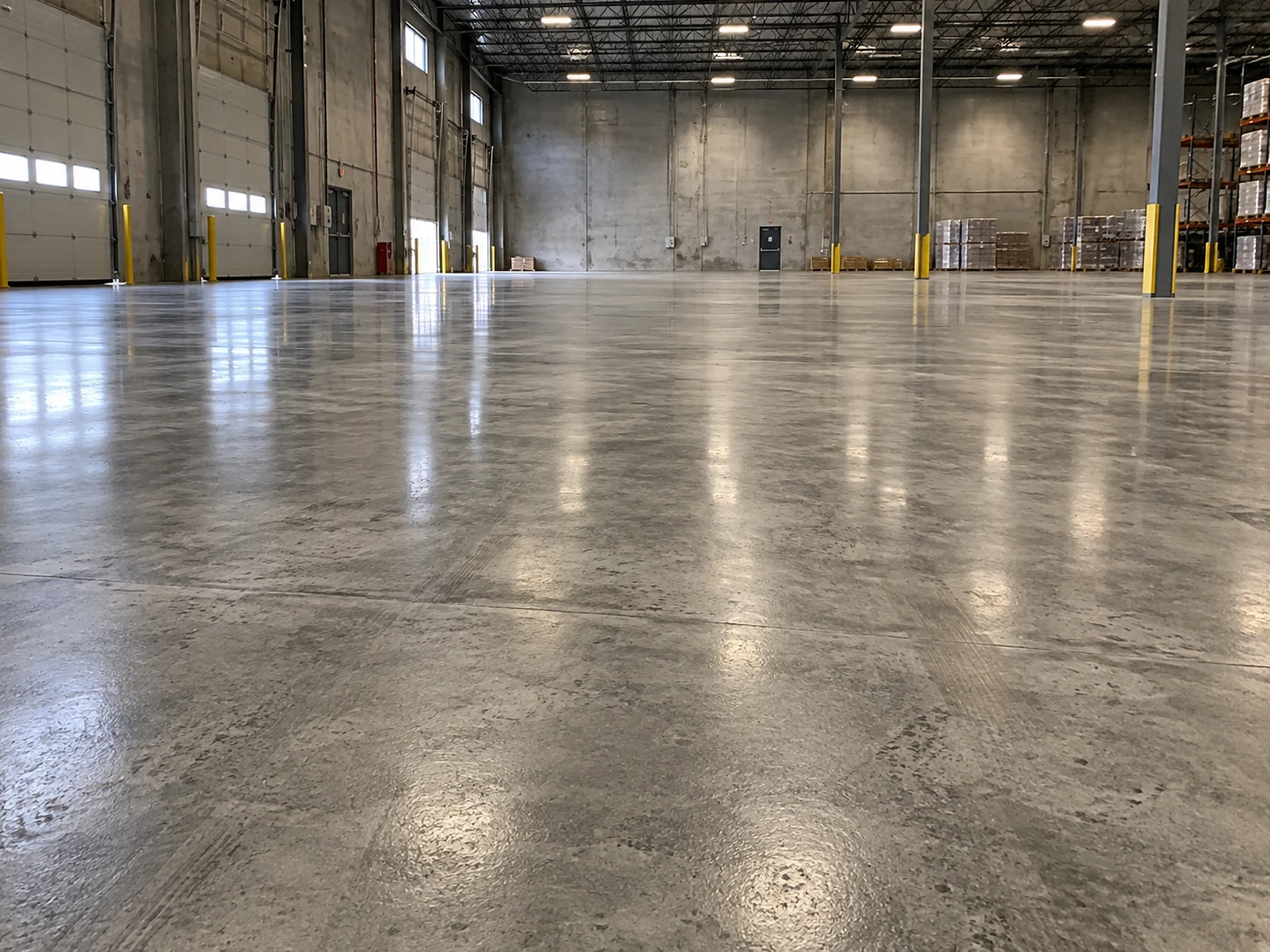
Polyaspartic
Chosen when downtime is the binding constraint. It cures fast and across a wide temperature range, so a bay or aisle can go back into service quickly. UV-stable, and tough enough for mechanical garages and workshop floors.
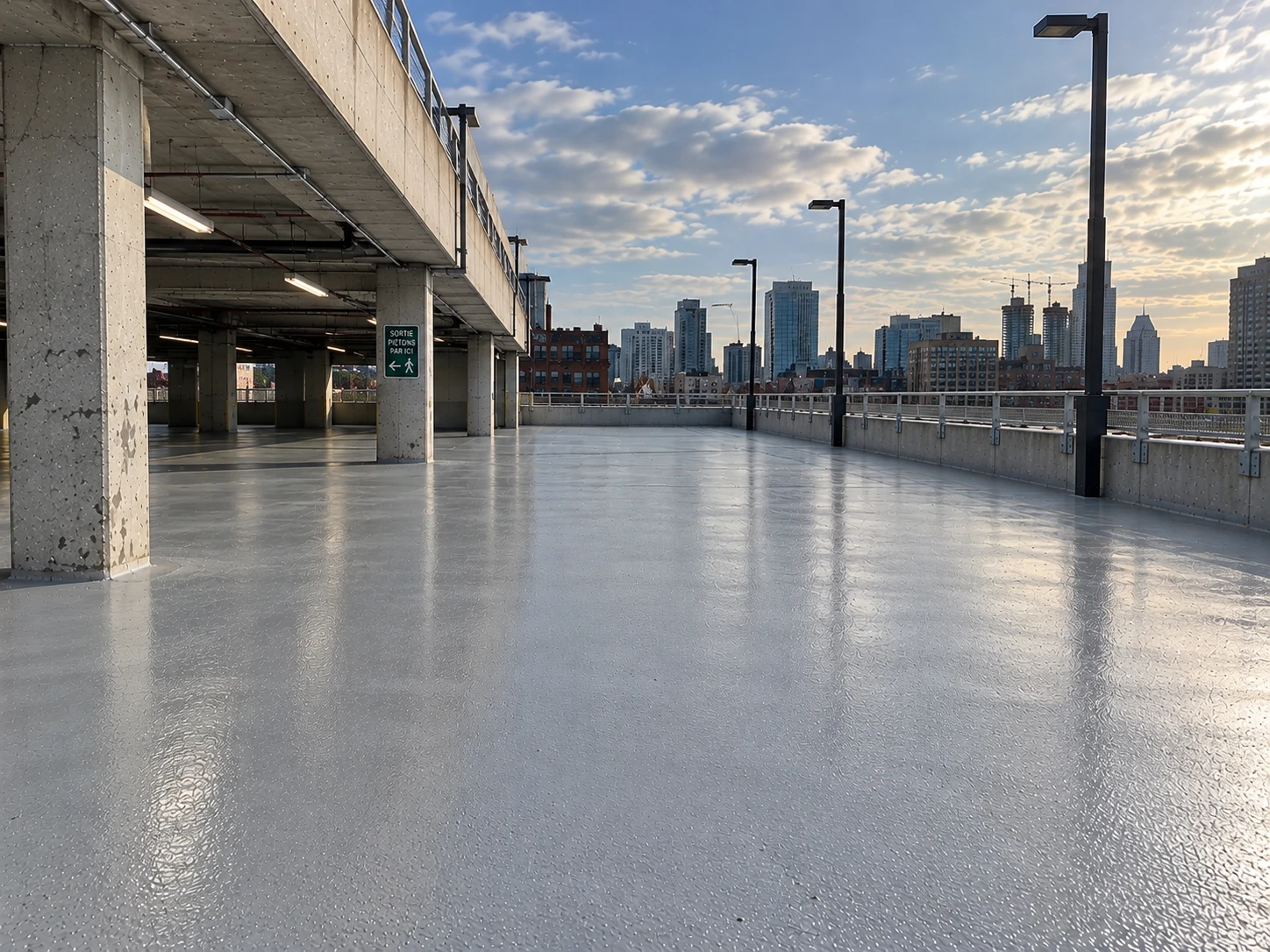
Buildings we work in
We work directly with owners and operators, and alongside general contractors and engineers where the floor is specified. If you have a spec or a tender package, send it with your enquiry and we will price the system named in it.
The concrete comes first
A coating is only ever as sound as the slab under it, and on an industrial floor the slab has usually had a hard life. Before anything is applied we deal with what is actually there.
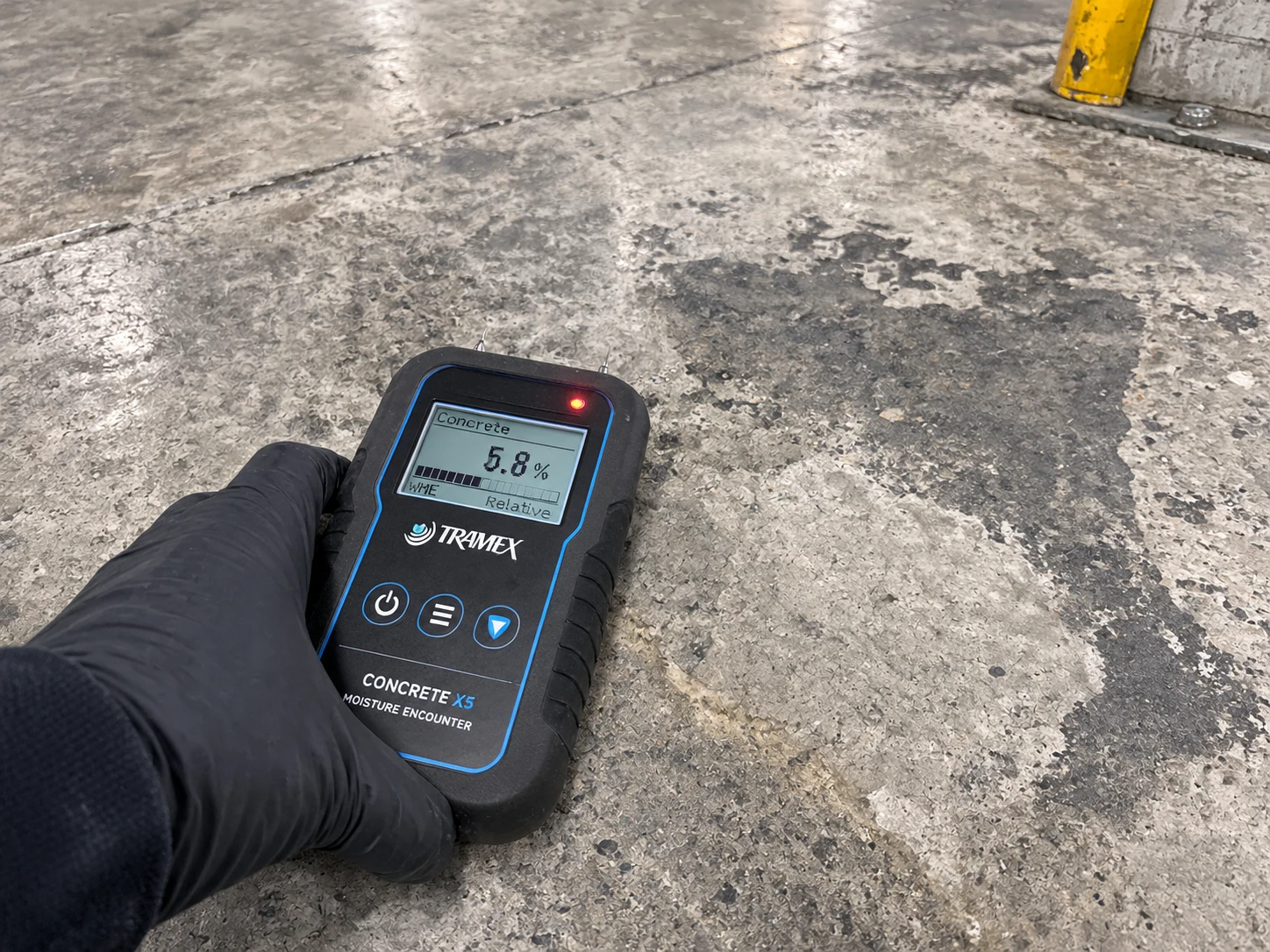
We also test for moisture vapour coming up through the slab. On a ground-floor or basement pour with no vapour barrier, that is the single most common reason a large industrial coating lifts, and it is cheap to check and expensive to ignore.
How the work is done
Site visit and assessment
We look at the floor in operation, not in a photo — traffic patterns, spill points, drainage, the state of the joints, and where the floor is already failing. Moisture is tested at this stage.
Written scope and fixed price
You get the system we propose, why it suits the use, the preparation included, and one price. No hourly billing and no surprises once the grinder is running.
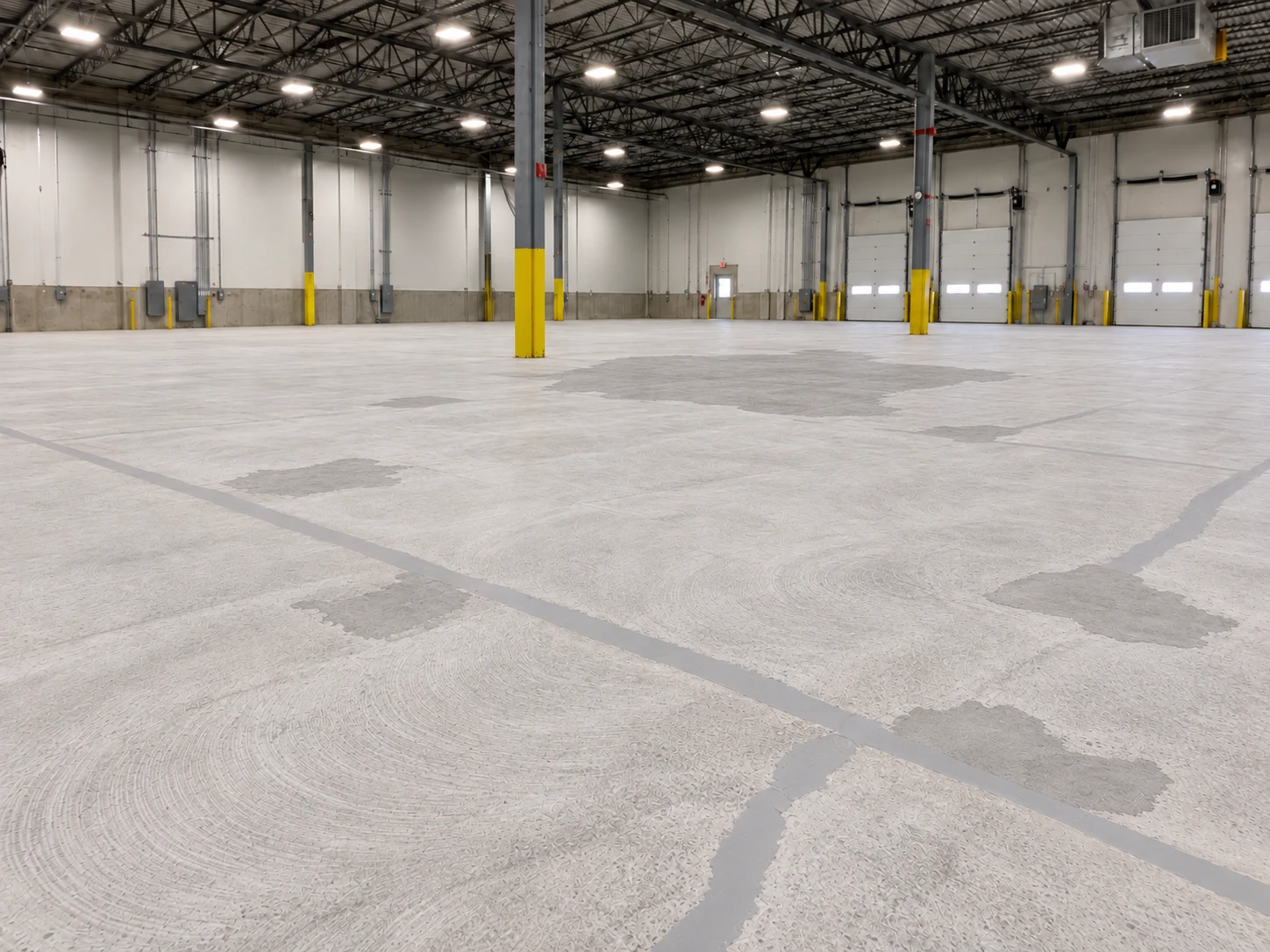
Preparation
Mechanical preparation across the full area, followed by concrete repairs and joint treatment. This is most of the labour on any industrial floor and it is what the result depends on.
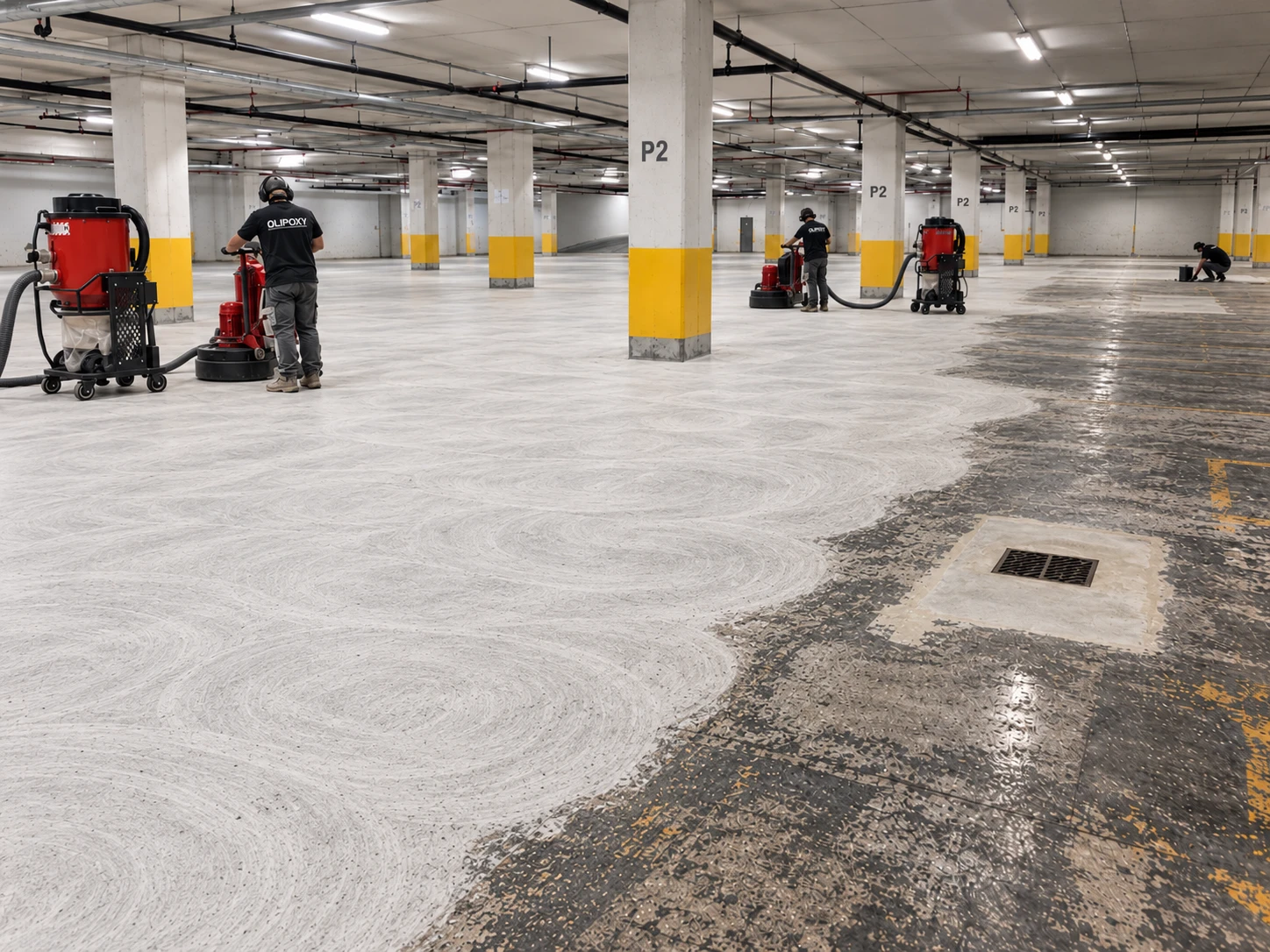
System application
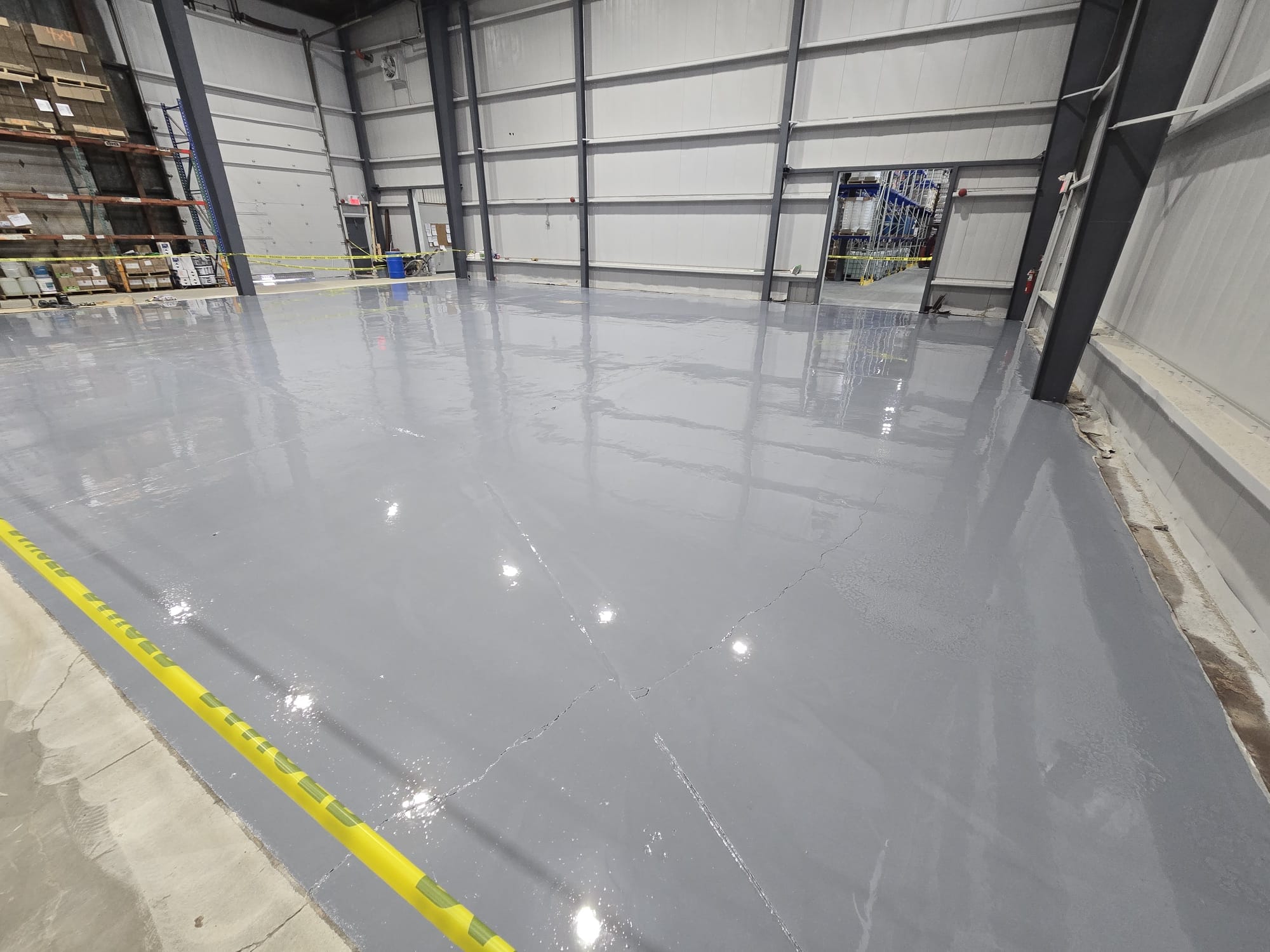
Primer, body coat and wear coat applied to specified thickness, with aggregate broadcast where slip resistance is required.
Line marking and handover
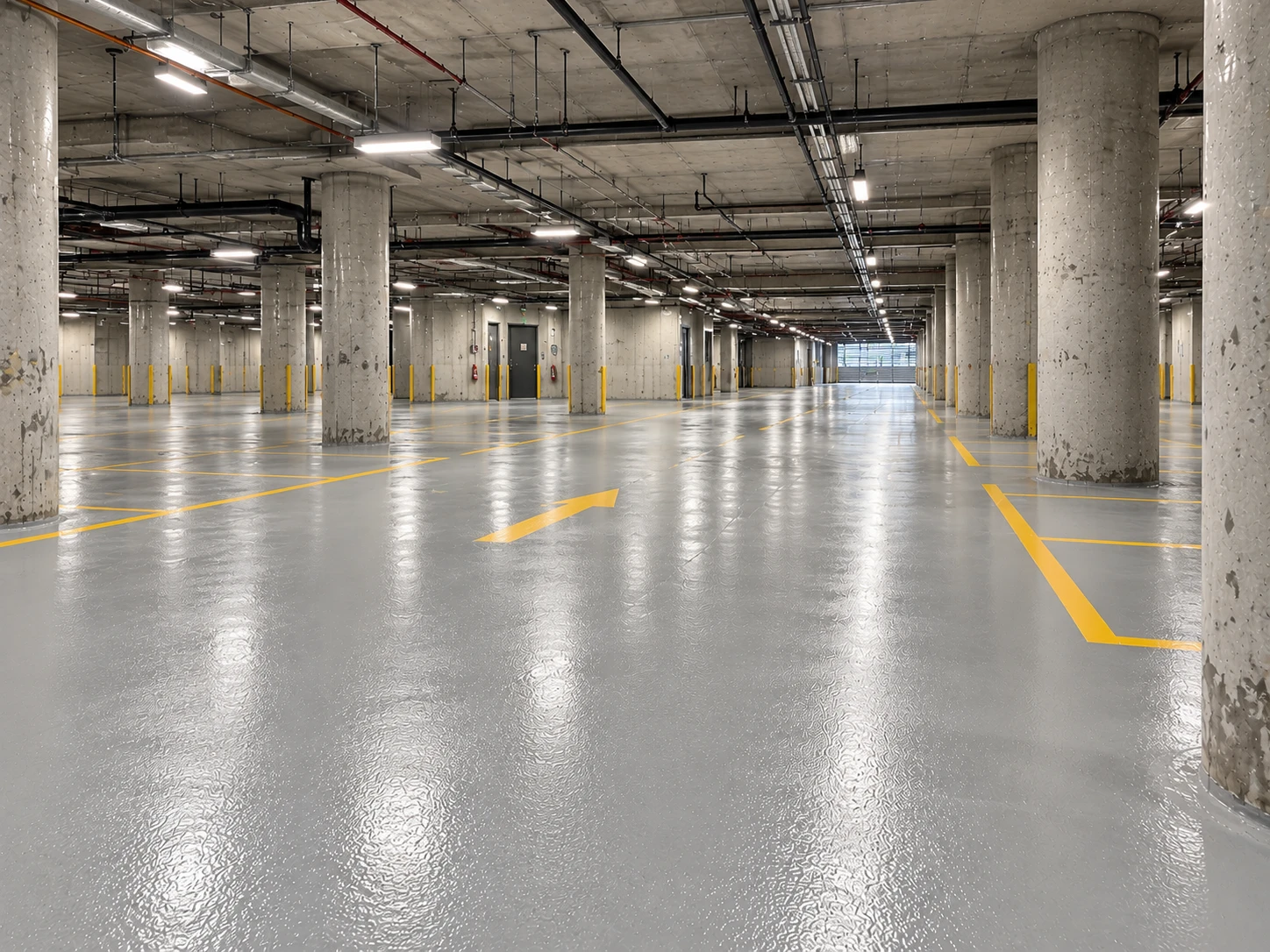
Traffic lanes, zoning, safety markings and bay numbers applied last. We confirm cure times for foot traffic and for vehicles so you know exactly when the area goes back into use.
Downtime is usually the real cost
For most operations the coating is not the expensive part — stopping work is. We plan around that. Floors are staged in sections so production or storage continues, and where the window is genuinely tight a polyaspartic build can return an area to service in a fraction of the time a conventional epoxy needs. Night and weekend work is available, and shutdown periods are the easiest time to book.
See finished floors
Warehouses, plants, workshops and parking structures completed across Greater Montreal.
Questions we get asked
How long before we can drive on it?+
It depends on the system. A polyaspartic build can typically take foot traffic the same day and vehicles within about 24 hours; a conventional epoxy build needs longer. We give you the actual cure schedule for your floor in the quote, because planning around it is usually more important than the price.
Our floor dusts constantly and it is getting into product. Will this fix it?+
Yes, and it is one of the most immediate differences. Dusting is the surface of the slab breaking down under traffic. Grinding removes the weak layer and the coating seals what remains, so the floor stops shedding into your product, your racking and your equipment.
Can you coat a floor that gets washed down daily?+
Yes — that is a specification question. Wash-down areas need slip resistance built into the top coat and joints and drains detailed so water cannot get underneath. Tell us about the cleaning regime and the chemicals used and we will spec to it.
Do you handle very large areas?+
Yes. On large surfaces grind and seal is often the better economic answer than a full build-up, and we will tell you if that is the case rather than quoting the more expensive system by default. Large floors are quoted per square foot with the rate improving as the area grows.
Are you licensed and insured?+
Yes — Olipoxy holds RBQ licence 5817-2180-01 and carries liability insurance. We can provide certificates for your records or your general contractor before work starts.
 © Olipoxy · RBQ 5817-2180-01 · Greater Montreal